Kitchen counters often become the busiest surfaces in the home. They collect mail, appliances, groceries, dishes, cooking tools, and everything else that needs a temporary place. While some items are useful to keep nearby, too much countertop clutter can make cooking feel harder and cleaning take longer.
The good news is that a clutter-free kitchen does not require a complete remodel or expensive storage system. With a few practical decisions and simple daily habits, you can create counters that are open, functional, and easier to maintain.
Start by Clearing Everything
Before deciding what belongs on your counters, remove every item. Place appliances, utensils, paperwork, food, and other objects on a nearby table or clean floor area. Starting with an empty surface makes it easier to see how much space you actually have.
As you sort, place each item into one of these groups:
- Use every day
- Use regularly but not daily
- Keep elsewhere
- Donate, recycle, or discard
- Does not belong in the kitchen
Try not to put anything back immediately. Take a few minutes to wipe the counters and notice which areas are most useful for food preparation, serving, or placing hot cookware.
Keep Only Daily Essentials Within Reach
A countertop should support your routine, not store every item you own. Keep out only the things you use nearly every day, such as a coffee maker, toaster, or knife block. Even then, consider whether each item needs to remain visible or could be stored in a nearby cabinet.
For appliances used only occasionally, such as a blender, stand mixer, or slow cooker, choose a convenient cabinet or pantry shelf. If an appliance is difficult to lift or access, it may be reasonable to keep it out. The goal is not an empty counter at all times; it is a counter that contains items you genuinely use.
Use the One-Week Test
If you are unsure about an item, put it away for one week. If you do not miss it, find a permanent storage location instead of returning it to the counter. This simple test can help identify objects that take up space without adding much convenience.
Create Homes for Common Clutter
Clutter often returns because items do not have a clear home. Give frequently misplaced objects a specific place to go. For example, use a drawer for takeout menus and reusable bags, a small tray for keys, or a basket for papers that need attention.
Think about where items are used and store them as close as possible to that activity. Keep cooking utensils near the stove, cutting boards near the food preparation area, and lunch supplies together in one cabinet or drawer. When storage matches your routine, putting things away takes less effort.
Make Better Use of Cabinets and Drawers
Overcrowded cabinets can push items onto the counters. Improve your existing storage before adding more containers or organizers.
- Remove items you no longer use.
- Group similar items together.
- Place frequently used objects at eye level.
- Store occasional items on higher shelves.
- Use shelf risers to create extra vertical space.
- Add drawer dividers for small tools and utensils.
Adjustable shelf organizers can make tall cabinets more practical, while pullout bins can help you reach items in deep spaces. Clear containers may be useful for dry goods, but avoid buying storage products until you know what you need. Organizers should solve a specific problem rather than create more items to manage.
Use Trays to Contain Small Groups of Items
A tray can make a collection of items look intentional and easier to move. Consider placing cooking oils, salt, and pepper on a washable tray near the stove. A separate tray could hold coffee supplies or breakfast items.
Trays work best when they are not overloaded. Leave enough space to remove an item without moving everything else. Choose a material that is easy to wipe clean, especially for areas near sinks and cooking surfaces.
Manage Mail, Papers, and Daily Drop Zones
Paper clutter can quickly take over a kitchen counter. Create one designated location for incoming mail and papers, such as a wall file, drawer, or small basket. Sort this area regularly instead of letting papers spread across the kitchen.
If your kitchen is also an entry point, set up a separate drop zone for keys, sunglasses, bags, and other everyday items. Hooks, a narrow shelf, or a small bowl can keep these objects contained without taking over the main work surfaces.
Control Appliances and Cords
Appliances are often useful but visually bulky. Arrange them so the most frequently used appliance is easiest to access, and store the rest. If you keep several appliances on the counter, group them in one area rather than spreading them across the entire kitchen.
Use simple cord-management solutions to prevent cables from becoming tangled. Cord clips, reusable ties, or a small cable box can keep cords neat. Always place cords away from heat, water, and areas where they could be pulled accidentally.
Make the Sink Area Easier to Maintain
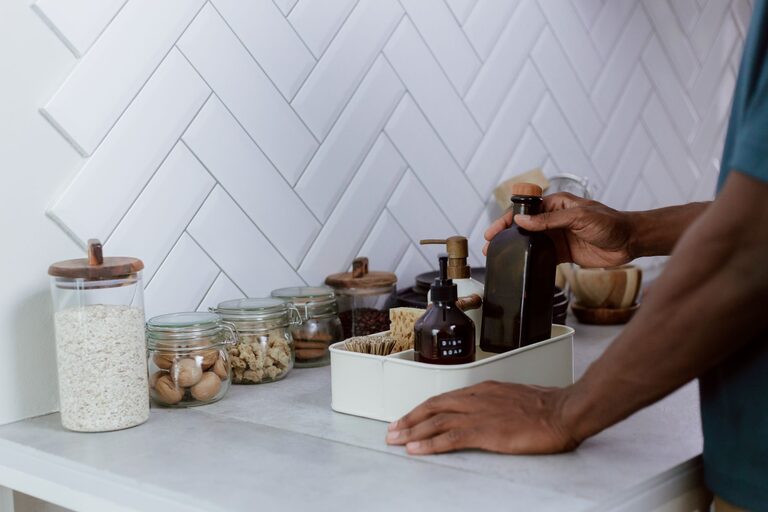
The area around the sink can become cluttered with soap, brushes, sponges, and cleaning products. Limit this space to the items you use regularly. A small caddy can keep supplies together, while a wall-mounted holder can free up part of the counter.
Let sponges and brushes dry properly between uses, and clean the caddy regularly. If a cleaning item is used only occasionally, store it under the sink instead of leaving it beside the faucet.
Build a Quick Daily Reset
A short reset at the end of the day can prevent clutter from becoming overwhelming. You do not need to deep-clean the kitchen every night. Focus on returning items to their homes and clearing the main work surfaces.
A simple reset might include:
- Put away food and cooking tools.
- Load or wash dishes.
- Return appliances and containers to storage.
- Sort mail and remove obvious trash.
- Wipe the counters and sink area.
Set a timer for five to ten minutes if you tend to delay this task. A consistent short routine is usually easier to maintain than an occasional major cleanup.
Review the System as Your Needs Change
A kitchen organization system should fit the way you actually live. If an arrangement is difficult to maintain, change it rather than blaming yourself. You may need to move frequently used items closer to the stove, create more space for lunch supplies, or store seasonal equipment elsewhere.
Review your counters every few months. Remove items that have gradually collected, check whether storage areas are overcrowded, and adjust locations based on your current routines. Small improvements can keep your kitchen functional without requiring a complete reorganization.
The most effective clutter-free kitchen is not necessarily the one with the fewest items. It is the one where useful objects have clear homes, daily surfaces remain available, and putting things away feels simple. Start with one counter, make a few practical changes, and build habits that help the space stay clear.

Related Posts